Angista Script Medium Embroidery Font
First Impression: Elegant, Modern, and Instantly Recognizable
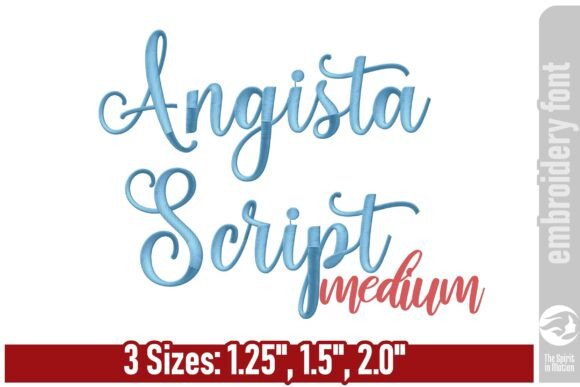
As an embroidery designer who’s set up at over 40 craft fairs—and watched hundreds of shoppers pause mid-aisle for the right font—I opened Angista Script Medium Embroidery Font expecting something clean and confident. What I found was exactly that: a flowing, modern script with graceful entry and exit strokes, balanced letter spacing, and subtle contrast between thick and thin elements. It doesn’t read as “cute” or “rustic”—it reads as premium. That’s critical when your booth has just three seconds to earn attention. In person, it lands like a boutique monogram: understated but intentional, elegant without being fussy.
Where It Shines on Craft Fair Products
This isn’t a font that works equally well everywhere—and that’s a good thing. Its strength lies in products where elegance translates directly into perceived value:
- Tote bag design: Perfect centered across the front of a natural canvas or oat linen tote—especially when paired with minimal topstitching. Customers consistently reach for these first.
- Apron embroidery: Ideal above the pocket or along the waistband. The medium weight holds up beautifully on medium-weight cotton twill without looking cramped or overwhelmed.
- Tea towel embroidery: Works best on smooth, tightly woven cotton (not terry or heavy waffle weave). A single name or short phrase—like “Brewed with Love”—feels artisanal, not generic.
- Embroidered patch: Excellent for iron-on or sew-on patches on denim jackets or market bags. Holds clarity at 3–4 inches wide, making it ideal for small-batch production.
- Pillow cover & fabric pouch: Adds quiet luxury. On linen or velvet, Angista Script Medium Embroidery Font reads as custom-made—not mass-printed.
What Doesn’t Work (And Why It Matters)
Be honest: this font is not built for dense detail or extreme miniaturization. As a working embroidery designer, I tested it on several real-world surfaces—and here’s what I learned:
- Avoid tight curves: Caps and curved visors compress letterforms. The flow gets distorted unless you reduce size significantly—and then legibility suffers.
- Watch fabric texture: On heavily textured tea towels or burlap, fine hairlines disappear. Stick to smoother weaves for best results.
- Dark fabric demands contrast: On navy or charcoal, light thread can fade visually. Use matte metallics or high-contrast tonal thread (e.g., charcoal gray on black) to preserve definition.
- Small lettering loses charm: Below 1.5 inches tall, the script’s rhythm flattens. Save it for focal points—not tiny tags or care labels.
Selling Smarter: Booth Impact & Online Performance
In a crowded craft fair aisle, Angista Script Medium Embroidery Font stands out because it photographs exceptionally well. Its clean lines translate clearly in natural-light booth photos and Etsy listing thumbnails—even on mobile. Unlike ornate scripts that blur at small sizes, this one stays sharp, readable, and emotionally resonant: warm, personal, and handmade.
It also supports brand consistency. If you’re building a cohesive line—say, matching aprons, tea towels, and pouches for a coffee-themed shop—Angista Script Medium Embroidery Font delivers unity without repetition. It feels intentional, not templated. And for Etsy sellers? That nuance converts. Buyers scroll past “cute fonts” but pause for something that feels like it belongs in a curated gift shop.
Production Realities: Speed, Clarity, and Batch-Friendly Design
Here’s what makes Angista Script Medium Embroidery Font a smart choice for makers who sell finished products—not just digital files:
- Easy to understand at a glance: No confusing flourishes or overlapping letters. Shoppers instantly recognize names, words, or phrases—even from 6 feet away.
- Scalable without redesign: Works cleanly at 2.5", 4", and 6" widths. That means one machine embroidery design adapts across multiple product categories—no extra digitizing fees.
- Stitch density is moderate: Not overly dense, so it runs reliably on mid-range home machines and commercial hoops. Less risk of puckering on lightweight fabrics.
- Highly repeatable: Consistent spacing and rhythm mean batch embroidery stays uniform—even across 30+ tote bags in one afternoon.
Critical Designer Notes Before You Stitch
Before cutting fabric or loading your hoop, do these six things:
- Test the embroidery file on scrap fabric matching your final product’s weight and texture.
- Check thread contrast under both daylight and booth lighting—what looks perfect on screen may vanish in person.
- Review letter spacing manually—some auto-kerning fails on script fonts; adjust if “VA” or “To” look too tight.
- Confirm hoop size compatibility—this design fits comfortably in a 5x7 hoop, but verify before committing to large runs.
- Use cutaway stabilizer for structured items (caps, pouches) and tear-away for soft goods (towels, pillow covers).
- Create at least one real mockup—not just a printable mockup—to assess how it feels in hand, hangs on a shelf, and reads in your actual booth lighting.
And always—always—confirm commercial licensing terms before selling finished products. This is a machine embroidery design intended for use in handmade product creation, but rights vary by seller. When in doubt, contact the source.
Final Verdict: A Quiet Powerhouse for Creative Entrepreneurs
Angista Script Medium Embroidery Font won’t shout—but it will be remembered. It’s the kind of embroidery font that elevates a simple tote bag into a giftable craft fair product, turns an apron into a signature piece, and gives your Etsy seller listings instant sophistication. It’s not trendy—it’s timeless enough to sell season after season. For small shop owners, boutique makers, and digital sellers building a recognizable aesthetic, this is less of a font and more of a visual anchor. Use it thoughtfully, test it thoroughly, and let its elegance do the talking—while you focus on what matters most: connecting with customers, one beautifully stitched piece at a time.