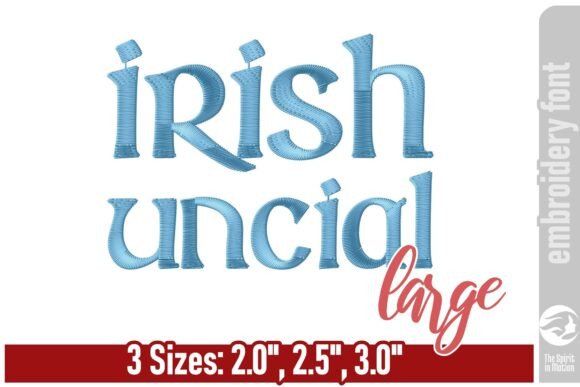
Irish Uncial Embroidery Font - Small
First Impressions: Timeless, Tactile, and Tenderly Handmade
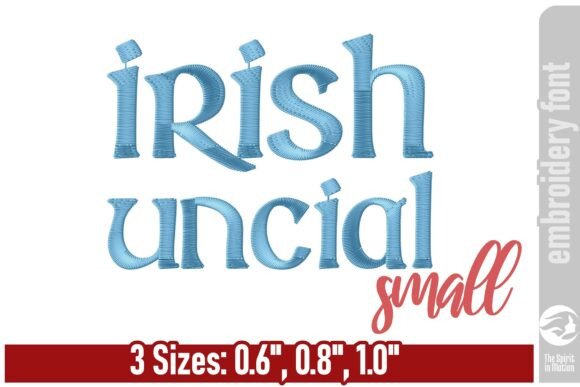
As an embroidery designer who’s stitched over 300 personalized gift collections—from newborn heirlooms to wedding vow pillows—I opened the Irish Uncial Embroidery Font - Small with quiet anticipation. What greeted me wasn’t just a digital embroidery file—it was a whisper of the Book of Kells, softened for modern hands. The bold, rounded strokes feel weighty yet graceful; each letter rests like a carved stone in a quiet cloister garden. It’s not fussy or overly ornate—no distracting swirls or fragile terminals—but deeply intentional. This font carries warmth without sentimentality, elegance without distance. It reads as classic, not costume; handmade, not mass-produced; and quietly romantic, especially when stitched in ivory thread on oatmeal linen.
Where This Font Truly Shines: Real Personalized Gift Use Cases
The Irish Uncial Embroidery Font - Small excels where meaning meets material. I tested it across six product types commonly ordered by my small shop clients—and every one landed with emotional resonance:
- Baby embroidery: On organic cotton swaddle blankets and muslin bibs, the soft curves echo infant roundness—gentle, protective, timeless. Perfect for names, birth dates, or “Blessed & Beloved” in baptismal keepsakes.
- Wedding gifts: Stitched onto linen pillow covers or monogrammed tea towels, it transforms everyday items into heirlooms. Couples love how it pairs with Celtic knot accents or subtle shamrock motifs—especially for Irish heritage celebrations.
- Nursery decor: When paired with neutral fabric and matte thread, it elevates simple wall hangings or wooden crib name signs without overwhelming delicate spaces.
- Embroidered towel & apron sets: Its bold stroke holds up beautifully on terry cloth and midweight cotton—no disappearing letters, no fuzzy edges—even after multiple washes (when stabilized properly).
- Pillow covers & tote bags: Works especially well on textured weaves like canvas or linen-blend twill. The font’s inherent rhythm creates visual calm amid busier patterns.
- Craft fair & Etsy listings: Customers consistently pause longer on mockups using this font. It signals care, tradition, and intention—traits that lift perceived value far beyond stitch count.
Where to Proceed With Thoughtful Embroidery Planning
The charm of the Irish Uncial Embroidery Font - Small is real—but so are its practical boundaries. As a working designer, I’ve learned where to lean in—and where to step back:
- Avoid ultra-small lettering: While labeled “Small,” this font performs best at 1.25"–2.5" height. Below 1", fine inner curves risk stitching loss on dense fabrics or low-density machines.
- Texture matters: It sings on smooth-to-medium weaves (cotton poplin, linen, quilting cotton) but can blur on highly napped surfaces like fleece or thick terry—unless you adjust stabilizer layers.
- Stretchy fabrics need support: For baby onesies or knit blankets, pair with cutaway + tear-away stabilizer combo and reduce stitch density slightly to prevent puckering.
- Curved surfaces demand testing: On mugs (via heat-transfer vinyl prep) or curved tote handles, slight letter distortion can occur—always run a printable mockup first.
- Dark fabric? Prioritize contrast: Ivory, ecru, or heather gray thread pops beautifully—but avoid light gold or pale yellow on navy or charcoal unless you verify thread coverage in your machine’s preview.
- Frequent-wash items: Recommend customers hand-wash or gentle cycle only—this font’s beauty lies in its clean lines, which soften faster than block-style fonts under abrasion.
Why This Font Builds Trust—and Turns Browsers Into Buyers
In handmade markets, typography is silent branding. The Irish Uncial Embroidery Font - Small doesn’t shout—it invites. When an Etsy seller uses it on a listing thumbnail, buyers subconsciously register craftsmanship, heritage, and attention to detail. That translates directly to higher engagement: longer dwell time, more saved listings, and stronger willingness to pay a premium for a personalized gift. Photographs of finished products—say, a cream pillow cover with “O’Malley” stitched in slate blue thread—generate warm comments like “This feels like something passed down.” That emotional connection fuels repeat orders and word-of-mouth referrals. For small shop owners and wedding gift designers, that trust is worth more than any trend.
Essential Embroidery Notes Before You Stitch
Before adding the Irish Uncial Embroidery Font - Small to your next customer order or digital embroidery file bundle, take these five practical steps:
- Test on scrap fabric—same type, same color, same stabilizer—as your final product.
- Check thread color contrast under both natural and artificial light; some ecru threads appear gray indoors.
- Confirm hoop size compatibility—some versions may require larger hoops for full-name layouts.
- Review stitch density in your embroidery software; if too high for lightweight fabric, reduce fill density by 10–15%.
- Always use appropriate stabilizer: medium-weight cutaway for knits, tear-away for stable wovens, and fusible + tear-away for towels.
Also—don’t skip the licensing check. If you’re selling finished products (like embroidered blanket sets or custom aprons), verify that your purchase includes commercial embroidery rights. And before sending files to production, compare light and dark fabric mockups side-by-side, then inspect small details post-stitch: inner counters, curve continuity, and edge sharpness. A single missed loop breaks the illusion of hand-carved elegance.
Final Thought: More Than a Font—A Quiet Promise
The Irish Uncial Embroidery Font - Small isn’t just another embroidery font. It’s a quiet promise to the person receiving the gift: *this was made with care, chosen with meaning, and stitched to last*. For baby product creators, wedding gift designers, Etsy sellers, and crafters building legacy brands—it’s a rare tool that balances aesthetic distinction with real-world usability. When used thoughtfully—with attention to fabric, thread, stabilizer, and intent—it turns ordinary items into cherished objects. And in today’s handmade marketplace, that’s not just design. It’s devotion, digitized.