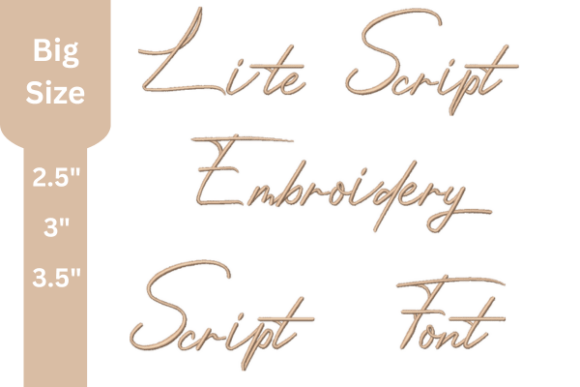
Lite Script Embroidery Font Review
A Professional Embroidery Designer’s Take on Real-World Brand Use
As an embroidery designer who’s digitized over 2,000 custom logos for small businesses—from neighborhood bakeries to indie florists and pet wellness brands—I approach every new font with equal parts curiosity and caution. When I first saw Lite Script Embroidery Font, my instinct was to test it not as a decorative flourish, but as a functional brand tool: Could this script reliably carry a café’s name on aprons? Would it hold up on a 2-inch embroidered patch for staff tote bags? Does it reinforce professionalism—or risk looking too casual for a boutique’s uniform line?
First Impression: Friendly, Modern, and Purposefully Refined
Lite Script Embroidery Font delivers exactly what its name suggests: lightness without fragility, script elegance without excessive swirls. It reads as modern and approachable—not fussy or overly ornate—making it ideal for small business merch that balances handmade charm with polished credibility. Think of a ceramic studio’s logo stitched cleanly across the chest of a black work shirt, or a local florist’s name looping gently along the hem of a linen apron. It avoids the stiffness of block fonts and the fragility of ultra-thin scripts—landing in that sweet spot where legibility meets personality.
Where Lite Script Embroidery Font Excels in Business Applications
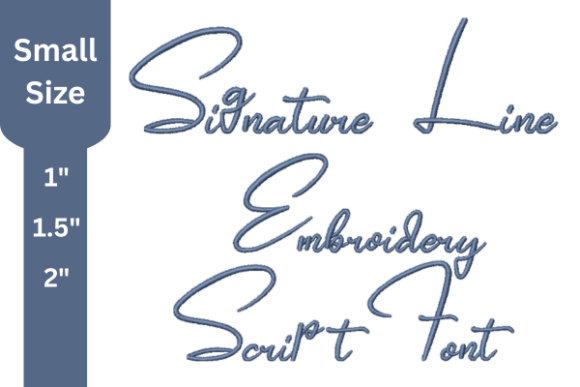
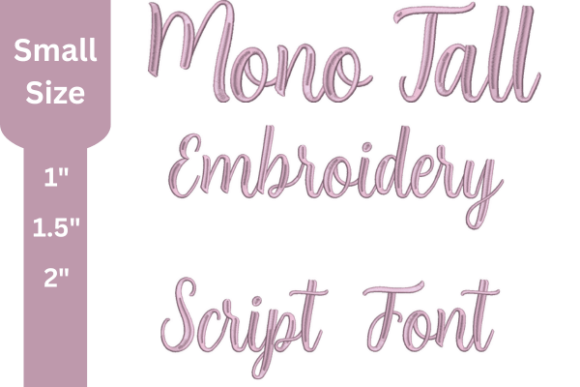
- Embroidered patches: Performs exceptionally well at 1.75–3 inches wide—clean stitch transitions, balanced letter spacing, and consistent stitch density prevent “spidery” thin lines from breaking apart during wear or laundering.
- Staff uniforms & aprons: Works beautifully on cotton twill, poly-cotton blends, and medium-weight linens. Its open letterforms breathe on fabric, avoiding the muddiness that plagues dense scripts on textured surfaces.
- Cap embroidery: Holds clarity on curved fronts when sized between 2.25–2.75 inches wide. The moderate height-to-width ratio helps maintain shape without distortion.
- Tote bag design & product packaging accents: Adds subtle sophistication to unbleached canvas or natural jute—especially effective when paired with a simple icon or monogram beside it.
- Custom apparel for Etsy sellers & craft businesses: Enhances perceived value of handmade products; customers consistently associate clean, confident script with intentional branding—not generic clip art.
Use With Intention: Situations That Demand Extra Testing
Like any well-digitized machine embroidery design, Lite Script Embroidery Font shines brightest when matched to the right context. Avoid using it without testing in these scenarios:
- Embroidered patches smaller than 1.5 inches—letterforms may lose definition, especially in lowercase “a,” “e,” and “s.”
- Highly curved surfaces like baseball cap bills or deep-dome beanies—stitch pull can distort fine joins without proper underlay adjustment.
- Dark uniforms with low-contrast thread colors (e.g., charcoal grey thread on navy twill)—reduces readability and weakens brand impact.
- Fabrics with heavy texture or stretch (terry cloth, ribbed knits, performance polyester)—requires additional stabilizer layers and possibly reduced stitch density.
- Items subjected to frequent commercial laundering—verify thread tension and stitch coverage hold up over 50+ wash cycles before full production.
How Lite Script Embroidery Font Strengthens Brand Identity
For small business owners, every stitch is a touchpoint—and Lite Script Embroidery Font supports trust through consistency. When your bakery’s name appears identically on staff aprons, customer gift totes, and seasonal event merch, you’re signaling attention to detail and operational cohesion. Customers don’t just see a font—they register reliability. That visual continuity extends to digital spaces too: use the same script in printable mockups, social media banners, and email headers to unify your brand assets across physical and digital channels.
It also elevates perceived value. A hand-stitched look is charming—but inconsistent, jagged, or poorly spaced lettering undermines professionalism. Lite Script Embroidery Font bridges the handmade aesthetic with commercial-grade execution. For Etsy sellers, that distinction directly influences buyer confidence and repeat orders. For local service businesses—like a pet grooming studio or creative workshop—it communicates care without sounding corporate.
Practical Embroidery Designer Notes for Small Business Use
Before committing to full production, here’s what I recommend—based on real projects with cafés, boutiques, and craft studios:
- Always test Lite Script Embroidery Font in black and white first—color can mask spacing issues or uneven stitch coverage.
- Check legibility at your smallest intended patch size—print a 1:1 digital mockup and view it from 3 feet away.
- Review thread color contrast against your base fabric—especially important for dark uniforms and natural fibers.
- Inspect kerning and spacing in full-word applications (“Sweet Grove Bakery” vs. standalone “Grove”). Scripts can tighten or loosen unpredictably across word lengths.
- Confirm hoop size compatibility—some versions of script fonts require larger hoops for smooth travel stitches.
- Test on actual fabric, not just tear-away stabilizer—fabric texture dramatically affects how script lines read post-embroidery.
- Create a physical mockup for client approval—digital previews rarely capture sheen, texture, and drape accurately.
- Compare Lite Script Embroidery Font beside existing design assets (logos, icons, secondary type) to ensure visual harmony—not just technical fit.
- Verify commercial licensing applies to your use case—especially for resale items, wholesale apparel, or branded product packaging.
Remember: a great embroidery file isn’t just about stitch count or file format—it’s about how confidently it carries your brand into the world. Lite Script Embroidery Font does that with quiet authority. Used thoughtfully, it becomes more than a machine embroidery design—it becomes part of your business’s voice.